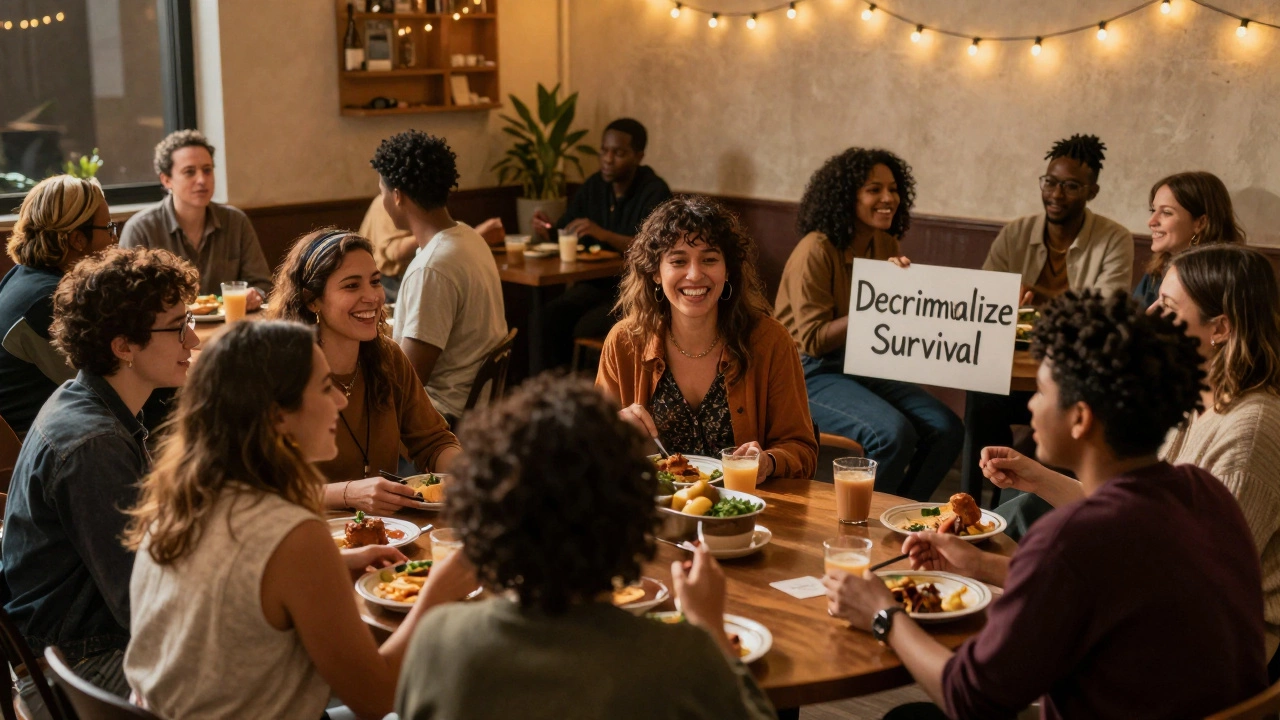
Supporting queer sex workers isn’t about charity. It’s about justice. These are people-our siblings, friends, neighbors-who survive in a world that criminalizes their labor, denies them healthcare, and erases their humanity. They aren’t victims waiting to be saved. They’re survivors demanding dignity. And if you’re reading this, you likely already know someone who does this work-or you’ve benefited from it without realizing it. The question isn’t whether to help. It’s how to help without making it about you.
Some people turn to platforms like euro girls escort london to understand the dynamics of sex work in Western cities. That’s fine, as long as you don’t confuse curiosity with compassion. Real support doesn’t start with clicking a link. It starts with listening.
Stop Criminalizing Survival
Every time a city passes a law to "clean up" streets by targeting sex workers, it’s not making things safer. It’s pushing people deeper into danger. In London, New York, or Jakarta, police raids and anti-prostitution ordinances don’t reduce exploitation-they remove access to safe spaces, emergency contacts, and peer networks. Queer sex workers, especially trans women and nonbinary folks, are disproportionately targeted. They’re more likely to be profiled, harassed, or arrested for simply standing on a corner or messaging someone online.
Instead of calling the cops when you see someone working, ask: What would make this person safer? Could they use a safe place to rest? A phone charger? A referral to a clinic that doesn’t judge? Real safety comes from community, not enforcement.
Financial Support That Doesn’t Patronize
Donating to organizations that serve queer sex workers is powerful-but only if you do it right. Avoid groups that frame sex work as a tragedy to be "rescued" from. Look for collectives led by current or former sex workers. Groups like the Red Umbrella Fund in Amsterdam or the Global Network of Sex Work Projects (NSWP) give direct grants to workers for housing, medical care, or legal defense. Your money doesn’t go to rescue missions. It goes to survival.
If you want to help personally, tip generously. If you’re a client, pay what’s asked. No haggling. No "I’m doing you a favor" comments. Sex work is labor. Treat it like it matters. And if you’re not a client? You can still support by buying from sex worker-owned businesses: art, zines, Patreon content, or even just a coffee they’re selling on the corner.
Use Your Voice, Not Your Savior Complex
Posting about "saving" sex workers on Instagram? That’s performative. Posting about decriminalization? That’s power. Use your platform to amplify the voices of queer sex workers-not to speak for them. Share their tweets. Repost their petitions. Tag your local representatives and demand they stop funding anti-sex work task forces. Tell your friends why laws like FOSTA-SESTA hurt more than they help.
And if you’re in a position to influence policy-whether you’re a teacher, a nurse, or a city council member-push for harm reduction. Support needle exchanges. Advocate for housing-first models. Demand that shelters accept trans and nonbinary people without forcing them to prove their "worthiness." Real allyship means showing up even when it’s uncomfortable.

Challenge the Myths
"They’re all trafficked." "They chose this because they’re broken." "They’ll change once they get a real job." These are lies. They’re repeated by politicians, journalists, and even well-meaning activists. But data from the World Health Organization and the Lancet shows that most adult sex workers enter the industry voluntarily-and stay because it pays better than minimum wage jobs with no benefits.
Queer sex workers often face discrimination in other fields. Trans women are turned away from nursing jobs. Nonbinary folks can’t get hired in tech because their names don’t match their IDs. Sex work isn’t a last resort. For many, it’s the only option that gives them autonomy, flexibility, and control over their bodies.
And yes, some people are trafficked. But conflating all sex work with trafficking does more harm than good. It leads to raids that separate people from their chosen families. It shuts down safe communication channels. It makes it harder for someone to call for help when they need it.
Build Real Community
Support isn’t a one-time donation. It’s ongoing presence. Show up at community dinners organized by sex worker collectives. Volunteer to drive someone to a doctor’s appointment. Help someone set up a secure online profile. Learn how to use Signal or Telegram so you can communicate safely with someone who can’t risk being tracked.
Queer sex workers don’t need you to fix them. They need you to stand beside them. To show up at rallies. To refuse to laugh at degrading jokes. To correct your friends when they say something cruel. To make space in your home, your church, your workplace-for them.
One of the most powerful things you can do is to stop asking, "What can I do for them?" and start asking, "How can I make space for them?"
Recognize the Intersection
Queer sex workers aren’t a monolith. A Black trans woman in Nairobi faces different dangers than a queer immigrant in Berlin. A nonbinary person in Jakarta deals with stigma rooted in colonial morality laws. A migrant worker in London might be afraid to report violence because they’re undocumented.
Support has to be intersectional. That means fighting racism, transphobia, xenophobia, and classism at the same time. If your advocacy only focuses on gender and ignores immigration status, you’re leaving people behind. If you only talk about queerness but don’t challenge capitalism, you’re missing the point.
Learn the history. Read works by queer sex worker writers like Sylvia Rivera, Miss Major Griffin-Gracy, or the collective behind the book Whores and Other Feminists. Understand how laws like the 1980s "War on Drugs" or the 2000s "anti-trafficking" wave targeted the same communities now being criminalized as sex workers.

Don’t Fetishize
"I love euro girl escort london"-this kind of language turns human beings into fantasies. It’s not admiration. It’s consumption. When you romanticize sex work as "edgy" or "liberating," you erase the exhaustion, the trauma, the daily fear. You turn survival into aesthetic.
Same goes for calling someone a "hot escort" or "cute girl" online. Even if you mean it as a compliment, it reduces them to their body. And for queer sex workers, especially those who are trans or gender nonconforming, being seen as a body-never as a person-is what gets them hurt.
See them. Don’t stare. Listen. Respect boundaries. Say their name. Remember it.
What If You’re a Client?
If you pay for sex, you’re already part of this ecosystem. That doesn’t make you bad. But it does make you responsible. Ask yourself: Am I treating this person like a human? Am I paying fairly? Am I respecting their limits? Do I know their name? Do I care about their safety?
Use platforms that let workers screen clients. Avoid places that require ID or force them to show their face. Never record without consent. Never share details. Never pressure them to do something they didn’t agree to.
And if you can afford it-tip extra. Give them a ride home. Send them a message later to say thank you, not just for the service, but for their humanity. That kind of respect is rare. And it matters.
Where to Start Today
You don’t need to quit your job or move to a new city. Start small:
- Donate $10 to a sex worker mutual aid fund
- Share a post from a queer sex worker collective on your social media
- Call your local representative and ask if they support decriminalization
- Correct someone who says "prostitution is exploitation" without context
- Learn the difference between trafficking and consensual sex work
And if you’re unsure what to say? Just say: "I’m learning. I’m here to listen." That’s enough.
Support isn’t about heroism. It’s about solidarity. Queer sex workers have been fighting for their rights long before you showed up. Your job isn’t to lead. It’s to stand with them.
And yes, you can still enjoy the company of someone who does this work-without reducing them to a stereotype. Just remember: the woman selling you a drink at the bar, the person who cleans your hotel room, the stranger who smiles at you on the subway-they might all be doing this too. And they deserve the same respect.
Don’t look away. Don’t look down. Look them in the eye. Say their name. Thank them.
That’s how you support your queer sex working siblings.
And if you’re still not sure where to begin? Start here: euro escort girls london. Not because it’s the answer-but because it’s a reminder that people are looking for connection, not just commerce. And so are we.